Meet the EUROpest Team
Comprising researchers, postdocs, and PhD students, the combined expertise of the EUROpest team span archaeogenetics, paleoenvironmental reconstruction, history, and paleoclimate modeling. Under the leadership of Adam Izdebski, Alexander Herbig, Elena Xoplaki, Timothy Newfield, Martin Bauch, and Piotr Guzowski, EUROpest is driven by its interdisciplinary team, who bring a truly holistic research approach to the project.
Meet out team members by clicking on the teams below!
Team section
Something about our teams.
Adam Izdebski's Team
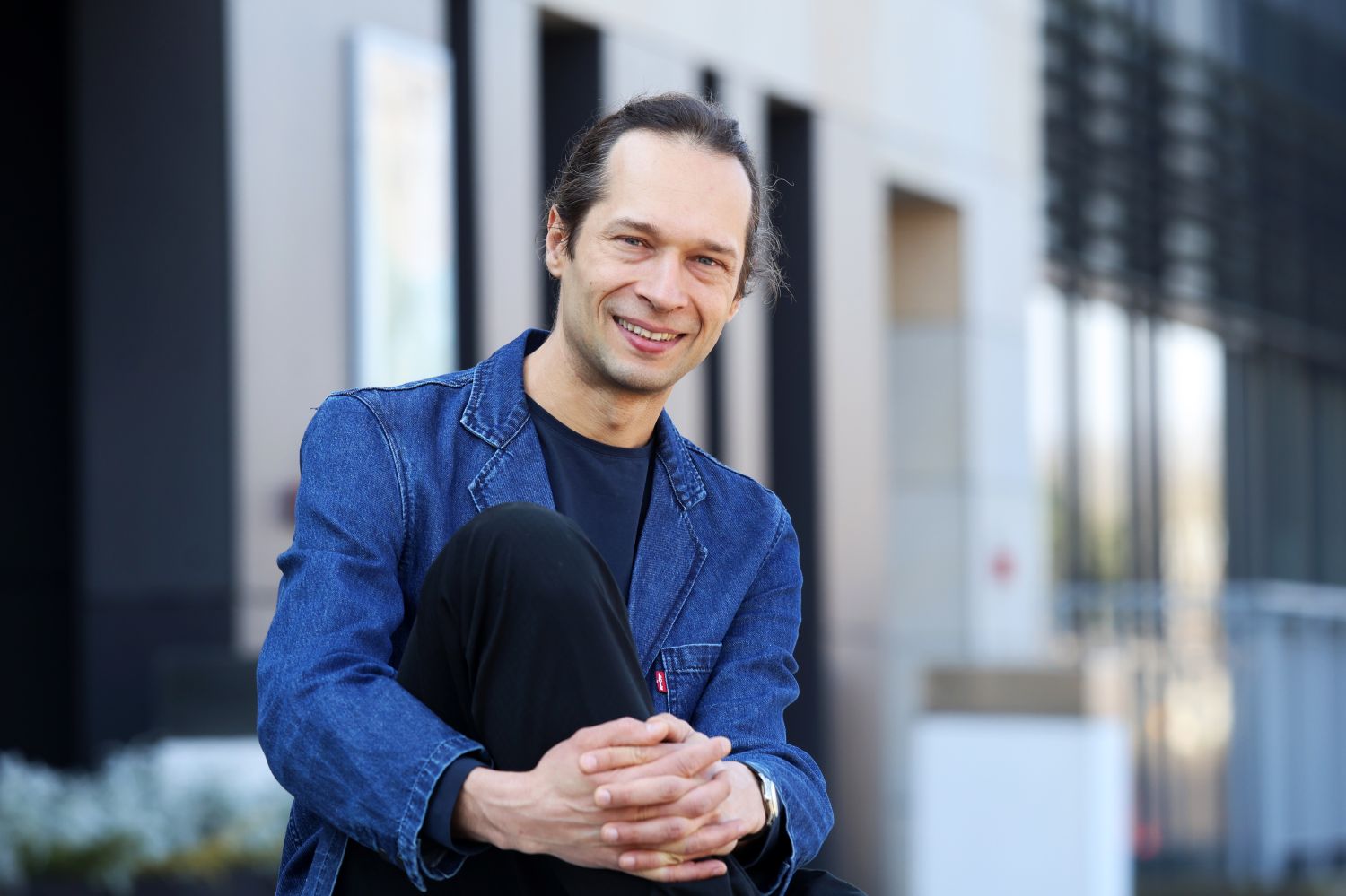
Adam Izdebski
Affiliation
Institute of Advanced Studies
Nicolaus Copernicus University in Toruń
Contact Information
Methodological Specializations
historical methods, palaeoecology
Adam Izdebski is a historian and ecologist. Originally from Bydgoszcz, he studied at Oxford and Warsaw (UW), where he earned a doctorate in ancient history and Byzantium. Due to the interdisciplinary nature of his research, he received the title of professor in the field of exact and natural sciences (biological sciences). In 2018-2025, he led an independent research group at the Max Planck Institute for Geoanthropology/Science of Human History in Jena, Germany, and previously was a member at the Institute for Advanced Study in Princeton. From 2012 to 2025, he was affiliated with the Jagiellonian University, and since July 1, 2025, he leads a research group in human ecology at the Institute of Advanced Studies of the Nicolaus Copernicus University in Toruń. In 2025-2026, Adam is also a visiting professor and project manager at the government-funded Research Institute for Humanity and Nature in Kyoto, Japan. He has participated in several initiatives related to scientific advice for international institutions, and since May 2025 he has been a member of the Group of Chief Scientific Advisers to the European Commission.
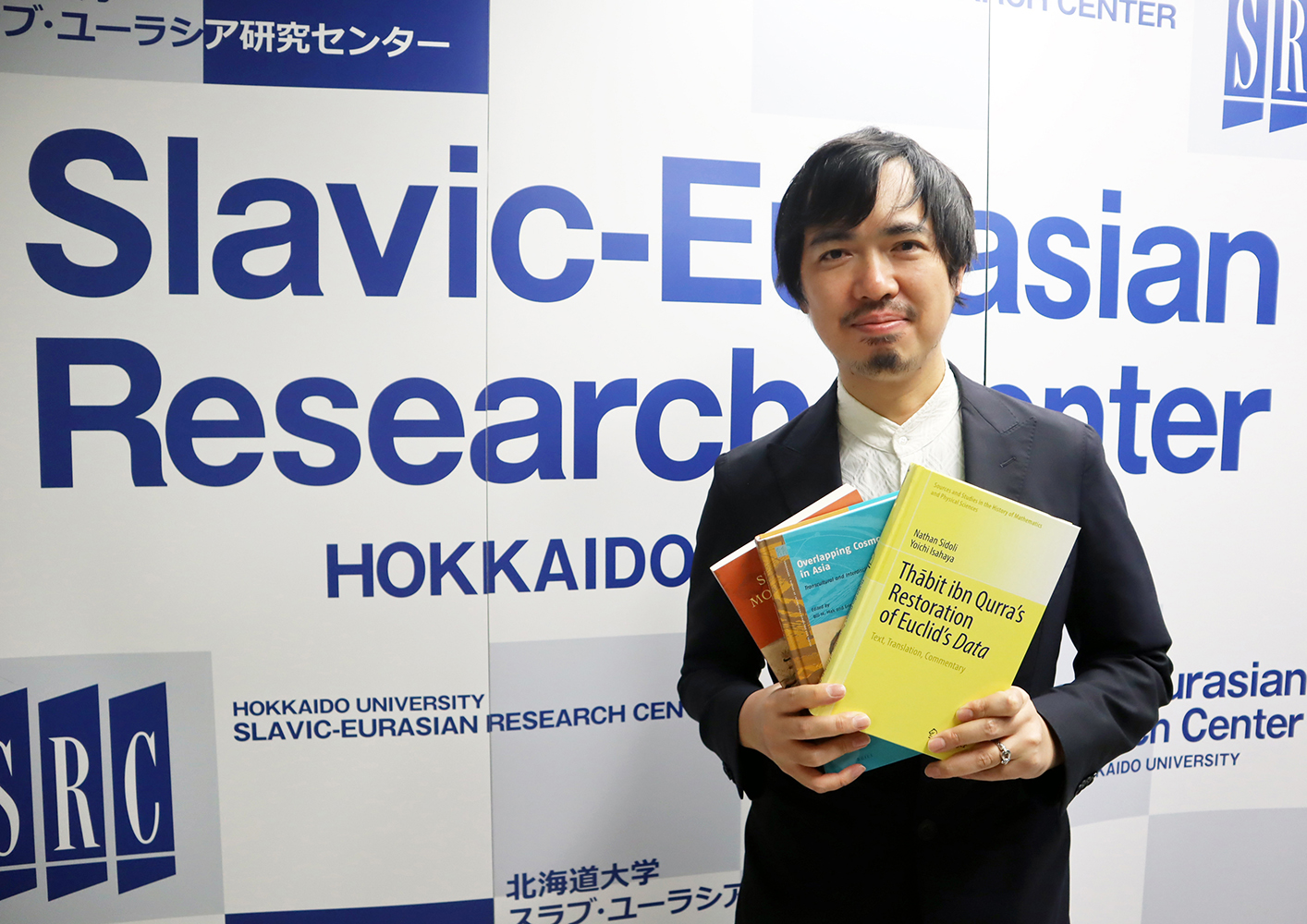
Yoichi Isahaya
Affiliation
The Slavic-Eurasian Research Center, Hokkaido University
Contact Information
Methodological Specializations
Cultural History, Medical History, Political History
Researcher Summary
Yoichi ISAHAYA is a Specially Appointed Associate Professor for the Platform for Explorations in Survival Strategies at the Slavic-Eurasian Research Center, Hokkaido University. His research focuses on the history of premodern Eurasia, the history of science, and the Mongol empire. He earned his Ph.D. in Area Studies from the Graduate School of Arts and Sciences, the University of Tokyo, in September 2015, with a dissertation titled Dialogue Concerning Two Astral Sciences: Naṣīr al-Dīn al-Ṭūsī, a Sage of Cathay, and Their Chinese Calendar in the Zīj-i Īlkhānī (c. 1272 AD).
His research examines the Mongol empire (1206–1368) within an Afro-Eurasian framework, emphasizing cross-cultural interactions and environmental history. During his doctoral studies, he studied at the Institute for the History of Science, University of Tehran. After completing his doctorate, he served as a postdoctoral fellow with the ERC project “Mobility, Empire, and Cross-Cultural Contacts in Mongol Eurasia” at the Hebrew University of Jerusalem, as a JSPS Research Fellow at Rikkyo University, and later as an Assistant Professor at the Slavic-Eurasian Research Center, Hokkaido University.
His recent Japanese monograph, The Mongol Empire in the History of Eurasia (Misuzu Shobô, 2025), situates the Mongol empire within the broader dynamics of Eurasian history. He currently leads the JSPS Grant-in-Aid for Scientific Research (A) project “Climate Change, Plagues, and Wars: The ‘Crisis of the Fourteenth Century’ in the Afro-Eurasian Context” (FY2025–2029).
He also serves as General Editor of Acta Slavica Iaponica and as International Correspondent for Annales. Histoire, Sciences Sociales.
Elena Xoplaki’s Team
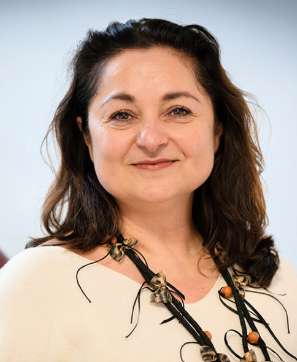
Elena Xoplaki
Affiliation
CMCC Foundation Euro-Mediterranean Center on Climate Change
Contact Information
Methodological Specializations
Climate Modelling, Climate Reconstruction
Research Summary
Elena Xoplaki is Senior Scientist at the CMCC Foundation – Euro-Mediterranean Centre on Climate Change, and Principal Investigator of the prestigious ERC Synergy Grant EUROpest (Grant No. 101166700). She is a leading expert on Mediterranean climate change, with research spanning weather and climate extremes (heatwaves, floods, droughts, compound and concurrent events), paleoclimatology, climate reconstructions and model intercomparisons, and the role of atmospheric circulation in shaping European and Mediterranean climate. She serves as Vice-Chair of the ITU/UNEP/UNFCCC/UPU/WMO Global Initiative on Resilience to Natural Hazards through AI Solutions and has coordinated or contributed to numerous European, Swiss, German, and US-funded research projects.
Adam Izdebski is a historian and ecologist. Originally from Bydgoszcz, he studied at Oxford and Warsaw (UW), where he earned a doctorate in ancient history and Byzantium. Due to the interdisciplinary nature of his research, he received the title of professor in the field of exact and natural sciences (biological sciences). In 2018-2025, he led an independent research group at the Max Planck Institute for Geoanthropology/Science of Human History in Jena, Germany, and previously was a member at the Institute for Advanced Study in Princeton. From 2012 to 2025, he was affiliated with the Jagiellonian University, and since July 1, 2025, he leads a research group in human ecology at the Institute of Advanced Studies of the Nicolaus Copernicus University in Toruń. In 2025-2026, Adam is also a visiting professor and project manager at the government-funded Research Institute for Humanity and Nature in Kyoto, Japan. He has participated in several initiatives related to scientific advice for international institutions, and since May 2025 he has been a member of the Group of Chief Scientific Advisers to the European Commission.